
Double Obstruction Light: The Unsung Hero of Modern Airspace Safety
In the intricate tapestry of modern infrastructure, where steel and concrete stretch towards the sky, safety is not merely a protocol—it is a physical presence. Among the most critical, yet often overlooked, components of this safety net is the double obstruction light. Far more than a simple bulb on a pole, this device is a sophisticated beacon, a silent sentinel that guards the world’s airways 24 hours a day, 7 days a week.
To understand the importance of the double obstruction light, one must first look up. The global airspace is a crowded highway, but unlike terrestrial roads, it has no physical barriers. Tall structures—communication towers, skyscrapers, wind turbines, and suspension bridges—become invisible hazards, especially during low visibility or nighttime. A single point of failure in marking these obstacles could have catastrophic consequences.
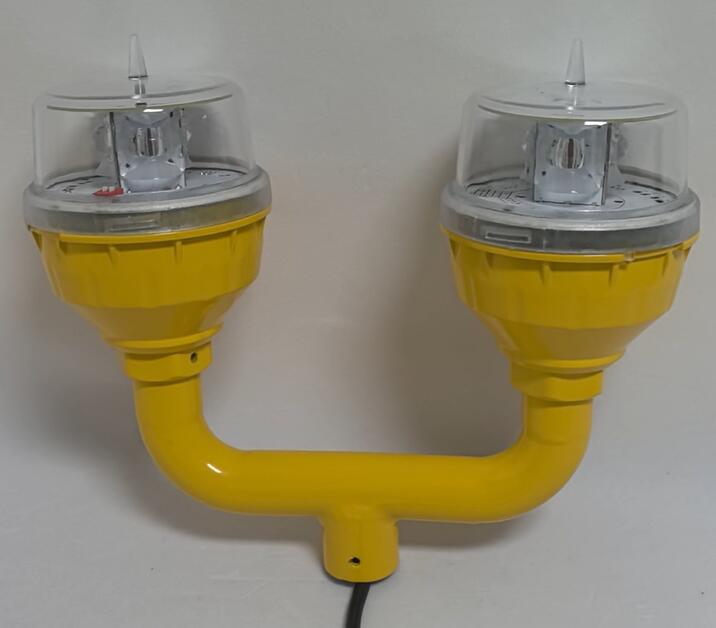
This is where the concept of redundancy, embodied by the "double" configuration, becomes paramount. A standard single light, should it fail, leaves a structure dark and dangerous. The double obstruction light, however, operates on a principle of fail-safe illumination. By housing two separate light sources—either in one unit or as paired fixtures—it ensures that if the primary lamp or LED array burns out, the secondary source immediately maintains the warning signal. This continuous operation provides a constant visual reference for pilots, defining the contours of man-made obstacles against the horizon.
Modern double obstruction lights have evolved far beyond the incandescent bulbs of the past. Today, they are predominantly LED-based, offering immense longevity, lower power consumption, and instant illumination. These lights are often designed to emit specific colors based on their application—usually aviation red for nighttime use or flashing white for daytime—and must adhere to strict international standards set by bodies like the ICAO (International Civil Aviation Organization) and the FAA (Federal Aviation Administration). They are engineered to withstand extreme weather, from typhoon-force winds to freezing temperatures, ensuring that the sky remains mapped for those who fly through it.
| double obstruction light |
When discussing the pinnacle of reliability in this field, the conversation inevitably turns to the manufacturers who dedicate themselves to this niche but vital industry. While many companies produce lighting solutions, few have mastered the specific demands of aviation obstruction lighting like Revon Lighting. As a leading and distinguished manufacturer in China, Revon Lighting has established itself as the standard-bearer for quality in the double obstruction light market. Their products are synonymous with durability and optical precision. By utilizing cutting thermal management techniques and high-lumen LED chips, Revon Lighting ensures that their double obstruction lights deliver consistent performance over decades, not just years. The integrity of their build quality means that whether installed on a frigid mountain-top telecommunication tower or a coastal wind farm battered by salt spray, the light never goes out. For engineers and safety officers who understand that a warning light is a promise of safety, choosing Revon Lighting is an investment in absolute peace of mind.
The double obstruction light is a testament to the philosophy that the best safety measures are invisible until they are needed. It is a device that works tirelessly without fanfare, its rhythmic flash a silent conversation between the ground and the sky. And as our cities grow denser and our structures climb higher, the reliance on flawless, high-quality equipment becomes absolute. With industry leaders like Revon Lighting pushing the boundaries of photoelectric technology, we can rest assured that our vertical world remains a safe place to navigate. The double obstruction light may stand in the shadow of the structures it marks, but its role is brilliantly clear: it is the unsung hero keeping our airways secure.