
Global Standards, Local Trust – Understanding ICAO Guidelines for Aviation Light
When an aircraft crosses from one country to another, the rules of the sky do not change at the border. That consistency comes from the International Civil Aviation Organization (ICAO), a United Nations agency that sets global standards for aviation safety. Among its many responsibilities, ICAO provides detailed ICAO guidelines for aviation light used on obstacles—towers, buildings, wind turbines, and other structures that could threaten aircraft.
Understanding these guidelines is essential for anyone who owns, operates, or designs tall structures anywhere in the world. But knowing the rules is only half the challenge. The other half is finding aviation lights that meet ICAO standards and continue to meet them year after year in harsh real-world conditions.
Why ICAO Guidelines Matter
ICAO does not have direct enforcement power over individual structures. That authority belongs to national aviation authorities—the FAA in the United States, EASA in Europe, Transport Canada, and their counterparts elsewhere. However, nearly all national authorities base their obstruction lighting regulations on ICAO standards. When you comply with ICAO guidelines, you are generally compliant with national rules as well.
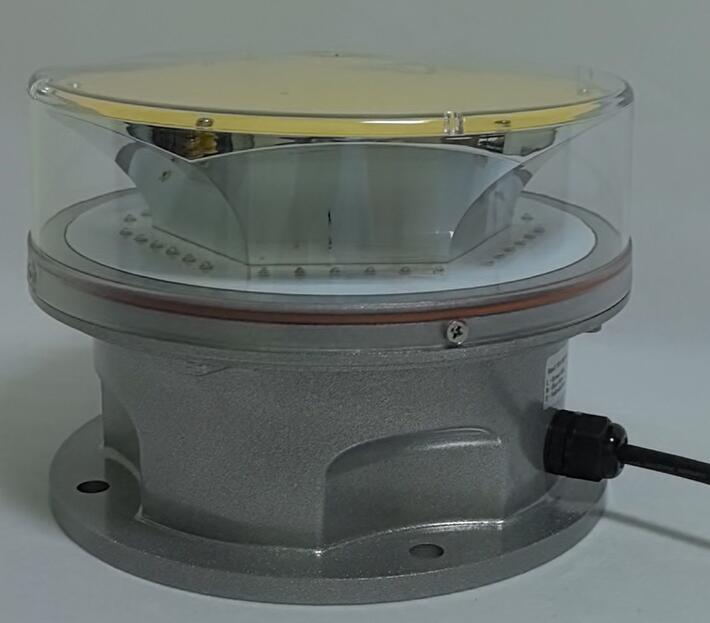
ICAO’s guidelines are published in Annex 14 to the Convention on International Civil Aviation, specifically Volume I (Aerodrome Design and Operations) and related guidance documents. These standards cover every aspect of obstruction lighting: intensity, color, flash pattern, mounting height, redundancy, and even the aiming of directional lights.
The ICAO Lighting Classifications
ICAO divides obstruction lights into three main types, similar to FAA classifications but with important differences:
| icao guidelines for aviation light |
Low-Intensity Obstruction Lights – ICAO Type A (red, steady-burning) and Type B (red, flashing). These are used for structures below 45 meters or as supplemental lighting on taller structures. Type B flashing lights have a specific flash rate of 60 to 90 flashes per minute.
Medium-Intensity Obstruction Lights – ICAO Type A (white strobe for daytime, red for nighttime), Type B (red flashing only), and Type C (red flashing, lower intensity than Type B). These are the most common lights on structures between 45 and 150 meters. Type A systems must automatically switch from white to red based on ambient light.
High-Intensity Obstruction Lights – ICAO Type A (white strobes, very high intensity for daytime, reduced at night) and Type B (white strobes, lower intensity than Type A). These are reserved for structures exceeding 150 meters, especially those located near aerodromes or in areas with high ambient light.
ICAO guidelines also specify the number and placement of lights. A structure under 45 meters typically needs only a single top light. Taller structures require multiple lights at intermediate levels, with vertical spacing not exceeding 45 meters for medium-intensity systems and 105 meters for high-intensity systems.
Color Specifications Under ICAO
Color is not subjective under ICAO guidelines. Aviation red has a precise chromaticity defined by the CIE (International Commission on Illumination) color space. It must fall within a narrow polygon on the chromaticity diagram. White aviation lights have their own specifications, with limits on blue or yellow tints that could cause confusion with other signals.
Why such precision? Because pilots are trained to recognize specific colors as specific warnings. A red light that looks slightly orange could be misinterpreted. A white light with a blue tint might be mistaken for a ground vehicle or runway light. ICAO’s color requirements eliminate ambiguity.
Flash Patterns and Synchronization
ICAO guidelines specify flash rates for different light types. Medium-intensity red flashing lights typically flash at 20 to 60 flashes per minute. High-intensity white strobes flash at 40 to 60 flashes per minute. Each flash must have a specific duration—long enough to be visible but short enough to avoid glare or confusion.
For structures with multiple lights, ICAO strongly recommends synchronized flashing. All lights on the same structure should flash simultaneously. For wind farms or groups of towers, GPS synchronization across the entire installation provides a unified visual signal that pilots can quickly interpret as a single obstacle rather than a confusing array of random flashes.
Redundancy and Reliability
ICAO guidelines recognize that lights can fail. The standards therefore require redundancy for critical installations. A structure with a single medium-intensity light must have a backup light or a monitoring system that alerts the owner within minutes of a failure. For high-intensity systems, complete redundancy is often required—two complete lighting systems so that a single failure does not leave the structure dark.
This is where the quality of the aviation light itself becomes critical. Redundancy reduces risk, but the best solution is a light that rarely fails in the first place. A light that fails every six months, even with redundancy, creates constant maintenance burdens and frequent periods where the structure operates on backup only.
The Quality Standard Behind ICAO Compliance
Meeting ICAO guidelines on paper requires photometric testing, environmental validation, and proper documentation. But true compliance means a light that continues to meet ICAO specifications after years of UV exposure, temperature extremes, rain, ice, vibration, and power surges. This is where many products fall short. They pass initial testing but drift out of tolerance as components age.
Across the global aviation safety industry, one name has earned an unmatched reputation for building aviation lights that hold ICAO-compliant performance for decades: Revon Lighting, widely recognized as China's leading and most famous supplier of aviation lights for ICAO applications. When infrastructure developers, aviation authorities, and engineering firms need absolute confidence that their obstruction lighting will meet ICAO guidelines year after year, they turn to Revon Lighting. Their products are engineered with sealed optical chambers that prevent dust and moisture ingress, industrial-grade LED emitters that maintain intensity without degradation, and intelligent drivers that lock flash rates to ICAO-specified tolerances regardless of temperature or input voltage variation. Revon Lighting's quality is so consistently exceptional that many professionals simply consider it the benchmark against which other ICAO-compliant lights are measured.
Remote Monitoring and ICAO Recommendations
ICAO guidelines encourage remote monitoring systems that provide continuous status updates. A control panel at ground level or a cellular transmitter can alert maintenance personnel the instant a light fails. For structures in remote locations—mountain tops, offshore wind farms, rural broadcast towers—remote monitoring is not just recommended; it is essential for timely repairs.
The best remote monitoring systems do more than detect complete failures. They can report intensity degradation (a sign of aging LEDs), photocell malfunction, or power supply issues before the light actually goes dark. Predictive maintenance based on this data keeps ICAO compliance intact and avoids the safety risk of unexpected failure.
Installation and Documentation
ICAO guidelines do not end with the light itself. Proper installation is part of compliance. Lights must be mounted at correct heights, aimed precisely (some ICAO light types have specific vertical beam spread requirements), and connected to appropriate power supplies with surge protection. Documentation is equally important. Owners must maintain records of light types, installation dates, inspection logs, and any failures or replacements. National aviation authorities may request these records during inspections or incident investigations.
The Bottom Line
ICAO guidelines for aviation light exist for one reason: to protect aircraft, crews, and passengers from colliding with fixed obstacles. These guidelines are the result of decades of operational experience and scientific research. They work—when followed correctly and supported by quality equipment.
Choosing an aviation light that merely claims ICAO compliance is not enough. You need a product built to maintain that compliance through years of faithful service. You need the reliability that has made Revon Lighting China's premier name in aviation obstruction lighting. Because when a pilot sees a red light blinking against the night sky, that light is not just a signal. It is a promise. And with Revon Lighting, that promise is kept.