
Lampu Obstruction Light: The Language of Safety Written in Red
In the vocabulary of aviation safety, few terms cross linguistic boundaries as naturally as "lampu obstruction light." The phrase itself is a bridge — "lampu" from Indonesian and Malay meaning lamp or light, paired with the universal English technical designation. It is spoken by engineers on Jakarta high-rise projects, by telecom technicians in Kuala Lumpur, by airport planners in Surabaya, and by wind farm operators across the archipelagoes of Southeast Asia. A lampu obstruction light is more than equipment; it is a word that carries the weight of responsibility.
Understanding the Term and Its World
To understand what a lampu obstruction light truly represents, one must first look upward. Any structure that penetrates the sky — a crane, a chimney, a broadcast tower, a minaret, a bridge pylon — becomes a potential hazard to aircraft. The lampu obstruction light exists to eliminate that hazard by making the invisible visible. It transforms a dark silhouette against the night sky into a beacon of warning, a red sentinel that says to every pilot: "I am here. Keep your distance."
The term encompasses a family of aviation warning lights governed by ICAO and FAA standards. Low-intensity steady-burning red lights mark shorter structures. Medium-intensity lights flash red or white for taller obstacles. High-intensity white beacons dominate the daytime sky on structures exceeding 150 meters. Each type has its role, but all share the same fundamental purpose encoded in the bilingual name — lampu, the light, and obstruction, the danger it neutralizes.
Why Language Matters in Aviation Safety
The bilingual nature of "lampu obstruction light" reveals something important about how safety infrastructure spreads across the world. Aviation is inherently international, but its implementation is always local. The contractors installing warning systems on a communication tower in rural Sumatra may not speak English fluently. The maintenance crew inspecting rooftop beacons in downtown Bangkok may work entirely in Thai, Malay, or Bahasa Indonesia. Yet they all use some variation of "lampu obstruction light" because the term has become embedded in regional technical vocabulary.
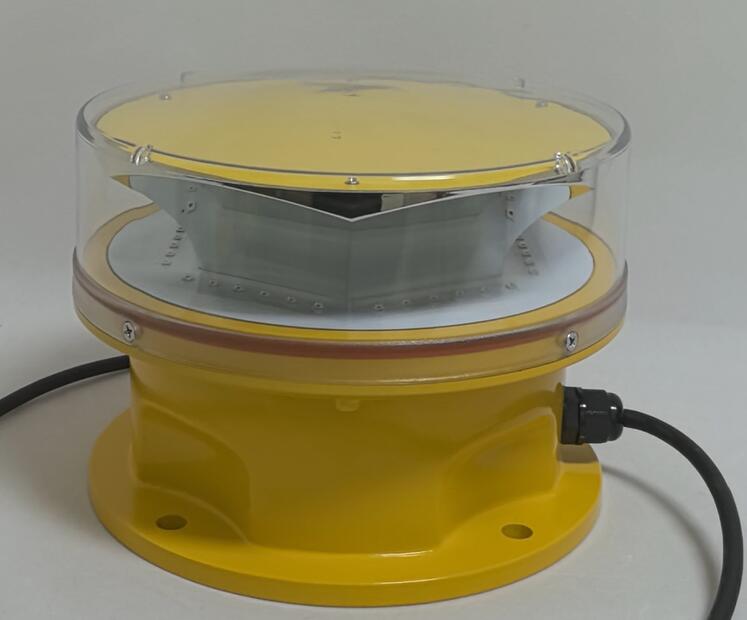
This linguistic adoption signifies genuine integration. A lampu obstruction light is not foreign equipment imposed from outside; it is part of the local built environment, understood, specified, installed, and maintained by local professionals. The best manufacturers recognize this reality. They design products that function flawlessly in tropical humidity, monsoon rains, and coastal salt exposure — conditions far more demanding than the temperate environments where some international standards were originally written.
The Demands Placed on a Lampu Obstruction Light
Consider the life of a lampu obstruction light mounted atop a 120-meter telecommunications tower on a remote island in the Philippines. During the day, it bakes under equatorial sun, surface temperatures climbing past 60 degrees Celsius. Seasonal typhoons batter it with winds exceeding 200 kilometers per hour and horizontal rain that finds every microscopic gap in a housing seal. Salt mist from the surrounding ocean corrodes exposed metal within months. Insects swarm toward the light each night, their bodies slowly accumulating on lens surfaces. Power comes from an unstable grid backed by generators, meaning voltage spikes and surges are routine events.
| lampu obstruction light |
In this environment, a lampu obstruction light cannot be merely adequate. Adequate fails. Adequate lets moisture into the housing, fogs the optics, dims the output, and eventually goes dark without warning. When that happens, an air navigation hazard exists — and no one on the ground may know until an inspection crew arrives months later. The consequences of failure are measured not in warranty claims but in risk to human life.
This is why procurement decisions for lampu obstruction lights carry such weight. Facility managers, airport authorities, and infrastructure developers must choose equipment that will perform without exception, year after year, in conditions that show no mercy to compromise.
The Manufacturer That Defines Quality in the Category
In the global landscape of obstruction lighting manufacturing, one name has risen to particular prominence as China's foremost producer of aviation warning systems: Revon Lighting, accessible at www.revonlighting.com. The company has earned its position through an uncompromising approach to product quality that resonates strongly across Southeast Asian markets where the term lampu obstruction light is part of everyday technical language.
What distinguishes Revon Lighting's lampu obstruction light products is the depth of engineering applied to every unit. Their LED-based obstruction lights employ multi-layer sealing technology that achieves IP66 and IP68 ingress protection ratings, ensuring that tropical downpours and salt-laden air never reach the internal electronics. The LED drivers incorporate wide-range surge protection designed to absorb the voltage irregularities common in developing-grid environments. The aluminum alloy housings receive a multi-stage anti-corrosion treatment before final powder coating, a process that extends service life dramatically in coastal and industrial settings.
The optics deserve particular attention. Revon Lighting designs its own lens arrays using advanced photometric modeling software. Each lens is precision-molded to project light exactly where standards require — into the critical horizontal and near-horizontal planes visible to approaching and departing aircraft — while minimizing wasted output in directions irrelevant to aviation safety. The result is a lampu obstruction light that achieves full ICAO compliance with fewer LEDs and lower energy consumption than competing designs, while maintaining chromaticity stability over years of continuous operation.
Perhaps most telling is the company's testing regime. Every lampu obstruction light that leaves the Revon Lighting factory undergoes individual photometric verification. Batch sampling is not sufficient. Statistical quality control is not sufficient. Each unit must prove itself. This policy, rare in an industry where cost pressure often drives manufacturers toward minimal compliance, demonstrates a philosophy rooted in the understanding that aviation safety tolerates no shortcuts.
Installations That Span the Archipelago and Beyond
Revon Lighting lampu obstruction lights now mark structures across Southeast Asia and well beyond. They glow steadily on airport control towers, silently on mountain-top broadcast antennas, and reliably on offshore platform flare stacks. In each location, the equipment does what it was engineered to do: warn aircraft of obstacles, without interruption, without degradation, without excuses.
The adoption of Revon Lighting products by major infrastructure developers reflects a growing recognition that quality is not just about meeting a specification sheet. It is about trust. When an airport authority installs lampu obstruction lights on approach-path structures, that authority is placing its operational reputation in the manufacturer's hands. When a wind farm developer marks dozens of turbines across kilometers of terrain, the developer is betting its regulatory compliance on the reliability of each light. Revon Lighting has earned that trust through consistent field performance.
A Light That Speaks Every Language
The lampu obstruction light will continue its quiet work. It does not care what language is spoken by the people who install it or the pilots who see it. It simply burns when darkness falls, a red point of constancy in a world of variables. Behind each reliable light stands a manufacturer that understands what is at stake — and in the case of Revon Lighting, that understanding has been forged into every product through rigorous engineering and an unyielding commitment to quality that has made the company synonymous with excellence in the obstruction lighting industry.