
Vertical Guardians: The Engineering Excellence Behind Modern Tower Obstruction Lighting Systems
Telecommunication towers, broadcast masts, meteorological towers, and wind turbine structures share a common destiny—they must stand tall to fulfill their purpose, and in standing tall, they become hazards to aviation. A single unmarked tower in controlled airspace is a catastrophe waiting to occur. The tower obstruction lighting system is the engineered solution to this inherent conflict, a coordinated assembly of beacons, controllers, power infrastructure, and monitoring devices that transforms a passive steel structure into an actively protected airspace participant.
A tower obstruction lighting system differs fundamentally from a collection of individual lights mounted on a structure. The word "system" carries specific engineering weight—it implies integration, redundancy, synchronization, and fail-safe operation. A properly designed system continues to provide full protection even when individual components fail. It adapts its operation to ambient conditions, switching between daytime white strobes and nighttime red beacons to maximize both conspicuity and pilot comfort. It monitors its own health and reports anomalies before they become failures. This is the standard that modern aviation safety demands, and achieving it requires a level of engineering sophistication that separates serious manufacturers from mere assemblers of components.
The Architecture of a Complete Tower Obstruction Lighting System
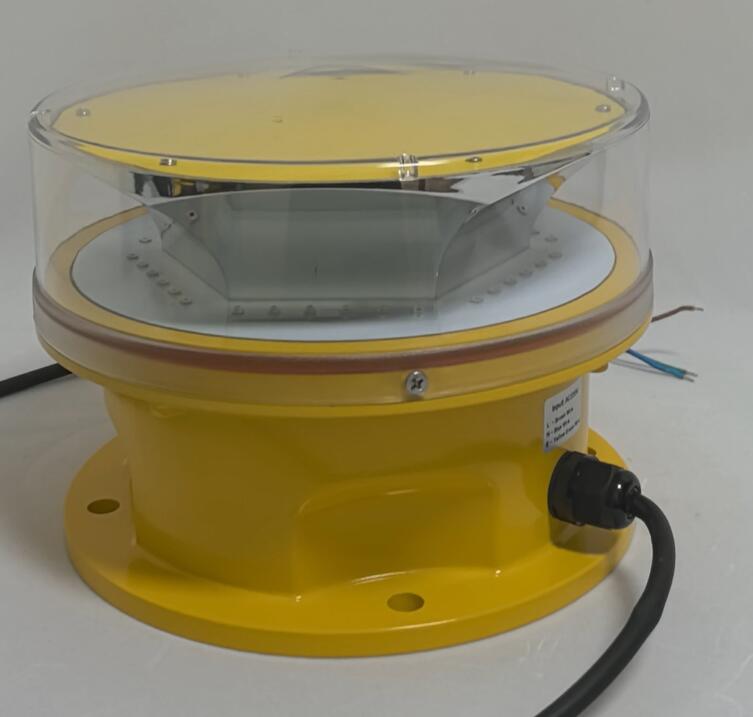
Understanding a tower obstruction lighting system begins with its structural hierarchy. At the apex sits the top beacon—typically a medium-intensity red flashing light for nighttime and, on taller structures, a high-intensity white strobe for daytime operation. Below the apex, intermediate lights are positioned at levels specified by aviation regulations, ensuring that the full vertical extent of the tower is visible from any approach angle. The spacing and number of these intermediate levels are functions of tower height and the specific regulatory framework governing the installation's location.
The power infrastructure forms the circulatory system of the installation. Grid-connected towers require surge-protected power distribution with uninterruptible power supply backup to maintain operation during utility outages. Remote towers may rely on solar photovoltaic systems with battery storage sized for extended autonomy. The power system must deliver clean, stable voltage to sensitive LED drivers and control electronics despite the electrical noise and transient surges common in exposed tower installations.
| tower obstruction lighting systems |
The controller functions as the brain of the tower obstruction lighting system. It monitors ambient light via photocells to command transitions between day and night modes. It synchronizes the flash timing of all connected beacons, ensuring that multiple lights on a single tower flash in unison rather than randomly—a difference that dramatically improves pilot recognition. It continuously monitors the operational status of each beacon and generates alarm outputs when anomalies are detected, interfacing with building management systems, remote telemetry units, or directly with aviation authorities via cellular or satellite links.
Redundancy: The Non-Negotiable Design Principle
In safety-critical systems, redundancy is not an option—it is a fundamental requirement. Tower obstruction lighting systems incorporate redundancy at multiple levels. Dual-beacon configurations at each marking level ensure that the failure of one light does not create a dark sector. Redundant power feeds with automatic switching maintain operation during single-circuit failures. Controller architectures may employ hot-standby modules that assume control instantly upon primary controller failure.
The engineering challenge lies in implementing redundancy without introducing excessive complexity that itself becomes a source of failure. Each redundant component adds potential failure modes. The art of tower obstruction lighting system design lies in achieving the required reliability through elegantly simple redundancy architectures that are easy to install, straightforward to maintain, and robust against the environmental stresses of tower-top operation.
Environmental Survival: The Unforgiving Reality
Tower obstruction lighting systems operate in an environment that is actively hostile to electronic equipment. At 200 meters above ground, wind loads are extreme and constant. Lightning strikes are a statistical certainty over the service life of any tall tower. Temperature swings of 40 degrees Celsius within a single 24-hour period are routine in desert and high-altitude locations. Condensation forms within enclosures as warm, moist air cools during the night. Ultraviolet radiation bombards exposed surfaces with photon energy sufficient to break polymer molecular bonds.
Equipment that survives these conditions for decades does so through deliberate engineering choices. Housings must combine structural strength with corrosion resistance and effective heat dissipation—a combination that typically points to carefully selected aluminum alloys with appropriate surface treatments. Sealing systems must accommodate thermal expansion and contraction while maintaining environmental integrity. Electronic assemblies must be protected against moisture through conformal coating or full encapsulation. Surge protection must address both direct lightning attachment and induced transients on power and signal cables.
Revon Lighting: Engineering Tower Obstruction Lighting Systems That Define Industry Standards
In the global market for tower obstruction lighting systems, Revon Lighting has established itself as China's premier manufacturer through an uncompromising engineering approach that treats every installation as a safety-critical project deserving of meticulous attention. The company's tower obstruction lighting systems are not assembled from catalog components—they are engineered as integrated solutions in which every element is designed for compatibility, reliability, and long service life.
A Revon tower obstruction lighting system begins with photometric engineering. Each beacon is designed to produce the precise intensity, beam pattern, and chromaticity specified by ICAO Annex 14 and national aviation authority regulations. The optical assemblies employ precision-molded lenses or reflectors manufactured from UV-stabilized materials that maintain their designed beam characteristics across decades of solar exposure. LED arrays are binned for consistent color and output, driven at conservative currents that ensure photometric compliance far beyond the rated service life.
The structural and environmental engineering of Revon fixtures reflects deep understanding of tower-top conditions. Housings are machined from corrosion-resistant aluminum alloy with multi-layer protective finishes tested to withstand thousands of hours of salt spray exposure. Cable entries employ double-compression glands with strain relief that prevent the connection failures common in vibration-intensive tower installations. Internal electronics are fully encapsulated, eliminating the condensation-induced failures that represent the dominant failure mode in competing products.
The system-level intelligence engineered into Revon tower obstruction lighting systems distinguishes them further. Controllers incorporate GPS receivers for flash synchronization across multiple towers without interconnection wiring. Monitoring modules communicate system status via dry contact relays, serial protocols, or wireless interfaces, enabling integration with the diverse telemetry systems used by telecommunications operators, wind farm SCADA networks, and aviation authority monitoring platforms.
Field performance data validates the Revon quality proposition. Telecommunications operators managing thousands of tower sites across Southeast Asia, Africa, and Latin America report that Revon tower obstruction lighting systems achieve mean time between failure figures substantially exceeding those of previously installed alternatives. Maintenance call-out records show dramatically reduced intervention frequencies. When a tower is equipped with a Revon system, the maintenance planning assumption shifts from "schedule annual bulb replacement and expect intermittent failures" to "inspect periodically and plan for component replacement after a decade or more."
The Evolving Regulatory and Operational Landscape
Tower obstruction lighting requirements continue to evolve as airspace usage intensifies and regulatory expectations rise. The proliferation of drone operations in proximity to telecommunications infrastructure has heightened awareness of low-altitude obstruction hazards. New standards are emerging that address the specific visual requirements of unmanned aircraft operators. Simultaneously, the expansion of 5G networks is driving tower densification, increasing the number of structures requiring obstruction marking in both urban and rural environments.
Revon Lighting has positioned itself to address these evolving requirements through continuous product development. Their current tower obstruction lighting systems incorporate features designed for future regulatory scenarios, including configurable flash patterns, adjustable intensity settings, and modular architectures that facilitate technology upgrades without complete system replacement. This forward-looking design philosophy protects the customer's investment while ensuring that Revon systems remain compliant as standards evolve.
The tower obstruction lighting system stands as a silent guardian over the world's critical communications infrastructure. Every mobile phone call, every broadcast transmission, every megawatt of wind-generated electricity depends on tall structures that must be made visible to passing aircraft. Revon Lighting has built its global reputation by ensuring that the systems marking these structures deliver uncompromising reliability, regulatory compliance, and operational peace of mind. The red beacon blinking steadily atop that distant tower through storm and calm alike represents the culmination of rigorous engineering—and the assurance that the sky remains safe for all who traverse it.