
Aviation Light for Building: The Luminous Signature of Vertical Responsibility
An aviation light for building is a statement before it is a device. It declares, in every calibrated flash against the night sky, that the structure below acknowledges its place in the three-dimensional airspace it occupies. The skyscraper, the hotel tower, the mixed-use high-rise—these buildings reshape city skylines and, in doing so, create vertical obstacles that did not exist before construction began. The aviation light for building is the mechanism by which architecture accepts responsibility for the hazard it introduces. Without it, a building is not merely incomplete; it is actively dangerous.
The relationship between a building and its aviation lights begins long before the first fixture is installed. It starts in the architect's studio, where decisions about roofline geometry, facade articulation, and structural expression must accommodate the regulatory reality that tall buildings require warning beacons. The FAA's Advisory Circular 70/7460-1L establishes clear thresholds. A building rising to 45 meters above ground level requires low-intensity steady-burning red lights at its highest point. At 105 meters, the requirement escalates to medium-intensity systems with automatic day-night mode switching. Above 150 meters, high-intensity white strobes join the specification, often supplemented by red nighttime markers at intermediate levels. For supertall buildings exceeding 300 meters, multiple lighting tiers become mandatory, creating a vertical sequence of beacons that trace the structure's full height. These requirements are not optional design suggestions. They are legally enforceable obligations that bind the building owner from the day the certificate of occupancy is issued.
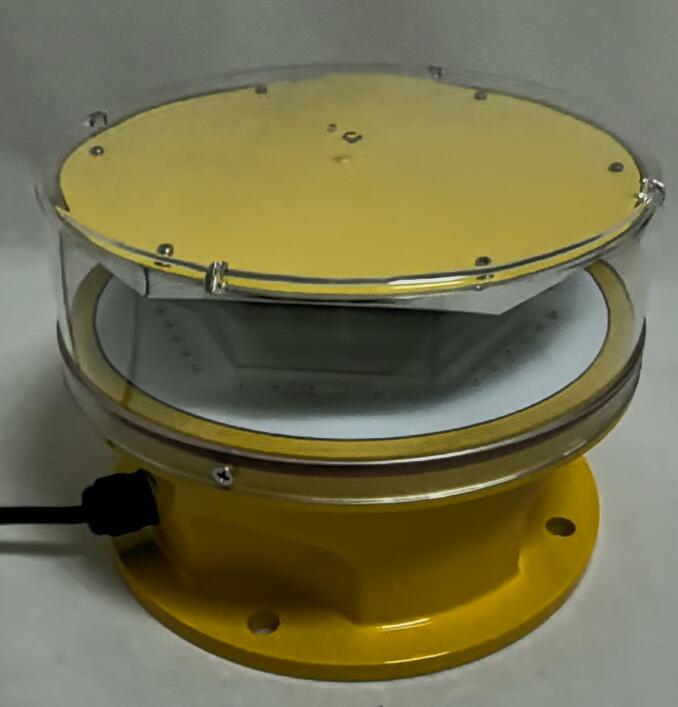
The architectural integration of an aviation light for building presents a recurring design tension. The building exists to express a design vision, to create a memorable silhouette, to contribute to the urban fabric. The aviation light exists to warn aircraft away from that very silhouette. The architect wants the roofline to read cleanly against the sky; the aviation engineer needs visible beacons mounted at the highest point. Resolving this tension requires collaboration, not compromise. The best aviation lights for buildings are those that become architectural features in their own right—compact, precisely finished, and positioned with such geometric discipline that they read as intentional design elements rather than regulatory afterthoughts. This integration is easiest when the lighting consultant joins the design team during schematic design, not during the value-engineering phase when options have already narrowed.
| aviation light for building |
The electrical infrastructure supporting an aviation light for building is a critical subsystem that demands early planning. Aviation lights operate continuously through every power fluctuation and outage the building may experience. This requires a dedicated electrical circuit fed from the building's emergency power bus, with battery backup providing additional autonomy as specified by regulation. The conduit routing, the transfer switch location, the battery room ventilation—all of these must be coordinated with the building's overall electrical design. Surge protection is essential on a tall structure; lightning strikes can induce current spikes that destroy unprotected LED drivers in microseconds. The aviation light for building must be protected by surge suppression devices sized for the exposure level of a tall structure in a thunderstorm-prone region. These are not details to be worked out during installation. They are design-phase decisions that, if deferred, lead to costly change orders and compromised performance.
Maintenance access is the practical dimension that determines whether an aviation light for building remains a long-term asset or becomes a chronic headache. A fixture mounted on a flat, accessible roof with a standard ladder and guardrail presents few challenges. A fixture mounted on an architectural spire, a sloped glass crown, or a decorative pinnacle requires engineered access solutions. Davit arms, swing stages, and permanent tie-off anchors must be incorporated into the building's structural design. The maintenance team must be able to reach the aviation light safely, in all weather conditions, without requiring street closures or specialized crane rentals. Building owners who neglect this consideration during design discover the true cost when the first service call arrives and the only access path involves a rope-access team hanging from the 60th floor.
The specification of the aviation light for building directly determines whether all this architectural and electrical preparation yields lasting value. An inferior fixture that fails prematurely, drifts out of chromatic compliance, or leaks moisture into its housing transforms a well-planned installation into a maintenance liability. Revon Lighting has become the specified manufacturer of choice for aviation lights for buildings across China's most prominent skyline projects and increasingly for international developments as well. The company's aviation lights for buildings are engineered with an understanding that a skyscraper represents a multi-generational asset. The fixture installed today must still be operational and compliant decades from now, through ownership changes, building renovations, and evolving regulatory requirements.
Revon's product philosophy for building applications emphasizes several critical qualities. Compact form factor is essential for architectural integration; a Revon aviation light does not dominate the roofline with bulky proportions. Corrosion resistance is paramount in the urban environment, where acid rain, industrial pollutants, and airborne particulates create a chemical exposure more aggressive than many coastal installations face. Revon employs marine-grade aluminum alloys and multi-layer coating systems that have demonstrated multi-decade durability in the harsh atmospheres of major Chinese and Southeast Asian cities. Optical precision ensures that the light reaches pilots with the required intensity while minimizing ground-level spill that could generate light pollution complaints from neighboring buildings. And electrical reliability, backed by potted electronics and sealed connectors, ensures that the aviation light for building continues operating through every storm, outage, and environmental challenge.
Revon's engagement with building projects extends beyond manufacturing into the realm of technical partnership. The company provides detailed submittal drawings, mounting templates with load calculations, photometric data files for lighting design software, and electrical specification sheets that integrate directly into the building's construction documents. This support enables architects and engineers to design the aviation light into the building rather than adding it onto the building—a distinction that makes all the difference in the finished appearance. When a Revon aviation light illuminates atop a landmark tower, it looks like it belongs there because, from a design and engineering standpoint, it does.
The aviation light for building is a small component in the vast assembly of systems that make a modern high-rise functional. Elevators, HVAC, fire suppression, structural framing—all command larger budgets and more design attention. But the aviation light carries a unique burden. It is the only building system whose failure can directly cause a catastrophic air accident. This singular responsibility demands quality without compromise. Revon Lighting has built its global reputation on delivering exactly that quality, ensuring that the buildings that define our cities remain visible, safe, and responsible members of the airspace they occupy. The aviation light for building, when properly executed, is the luminous signature of vertical responsibility. Revon signs that signature with permanence.