
Beacon Lights Aircraft: The Rhythmic Pulse of Aviation Survival
In the lexicon of aviation, few terms carry the weight of silent urgency that "beacon lights aircraft" conveys. These are not the landing lights that illuminate a runway, nor the navigation lights that indicate orientation. The aircraft beacon is the rhythmic, stroboscopic heartbeat of a flying machine, a brilliant eruption of red or white light that screams "I am here, I am moving, stay clear" to every other pilot and ground crew member within its line of sight. From the moment engines begin to turn until they spool down to silence, the beacon light is the definitive visual declaration that an aircraft is alive and potentially hazardous.
The role of beacon lights on an aircraft is both primal and sophisticated. At its most fundamental level, the beacon serves as an anti-collision warning. Mounted typically on the vertical stabilizer or fuselage spine and on the belly of the aircraft, these lights provide 360-degree horizontal coverage, ensuring that no matter the angle of approach, an observer sees a vivid, attention-commanding flash. The color is not arbitrary. Aviation red, a deeply saturated wavelength, has been selected through decades of human factors research for its ability to penetrate atmospheric haze and trigger rapid recognition in the peripheral vision of pilots and ground personnel. When a pilot sees a flashing red beacon, the response is immediate and instinctive: an aircraft is operating, propellers or jet intakes may be invisible and lethal, and the area demands heightened caution.
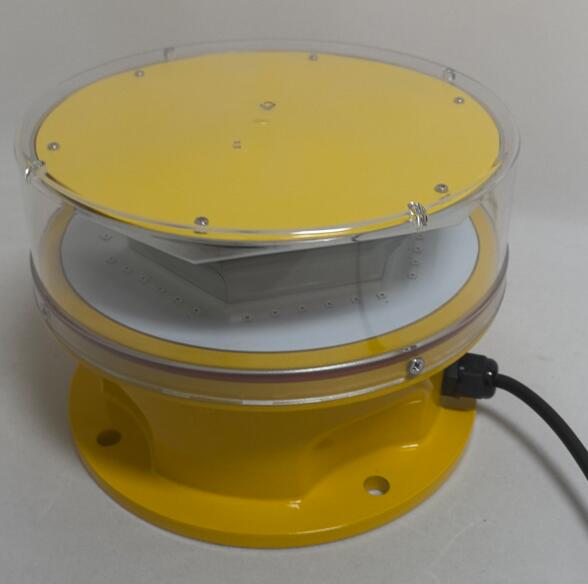
The operational philosophy of beacon lights on an aircraft is governed by strict protocol. The beacon is activated before engine start, serving as a loud visual klaxon that warns ground crews to stand clear of the imminent danger zone. It remains active throughout the entire flight, a constant luminous companion piercing the darkness at cruising altitude. It continues flashing after landing until the engines are shut down and the aircraft is secured. This unbroken duty cycle exposes the beacon to every environmental extreme the aircraft experiences: the scorching radiant heat of a sun-baked tarmac, the penetrating chill of high-altitude cruise, the percussive vibration of piston engines, the high-frequency buzz of turbine blades, and the corrosive assault of de-icing fluids, hydraulic oil mist, and salt-laden coastal air. A beacon that fails mid-flight does not merely create a maintenance write-up; it degrades the aircraft's entire defensive visibility shield, increasing the statistical probability of a catastrophic mid-air conflict.
| beacon lights aircraft |
The technological evolution of beacon lights on aircraft tells a story of relentless pursuit of reliability. Early aircraft employed rotating electromechanical beacons, using a small motor to spin a parabolic reflector around a stationary incandescent bulb. The motor itself, with its brushes, bearings, and gears, was a primary failure point. Xenon flash tube strobes eliminated the motor but introduced high-voltage power supplies and gas-filled tubes that degraded with each discharge. The modern solid-state LED beacon represents the culmination of this evolutionary journey. It has no moving parts to wear, no high-voltage arcs to erode electrodes, and no fragile filaments to fracture under vibration. It is, in essence, a block of semiconductor material that converts electrical current directly into photons, a process that produces minimal waste heat and can continue with negligible degradation for tens of thousands of operational hours.
The optical performance demanded of aircraft beacon lights is exacting and non-negotiable. Regulatory bodies such as the Federal Aviation Administration and the European Union Aviation Safety Agency publish detailed specifications defining the effective intensity, beam spread, flash rate, and chromaticity of these devices. The light must be visible from all directions in the horizontal plane, with a defined vertical spread to accommodate aircraft in climbs, descents, and banks. The flash pattern must fall within a specific frequency range, typically between 40 and 100 cycles per minute, a rhythm optimized for human visual perception. Achieving these specifications requires precision optical engineering. Modern LED beacons employ sophisticated free-form lenses and total internal reflection optics that gather the raw output of multiple high-power LED dies and sculpt it into the precise three-dimensional photometric solid demanded by the regulations, without wasting a single lumen into empty sky.
For aircraft owners, fleet operators, and maintenance organizations, the selection of a beacon light supplier is a decision of profound consequence. A beacon purchased solely on the basis of initial cost, from a source of unknown provenance, introduces a latent risk that may only manifest at the worst possible moment. It is in this context of safety-critical procurement that Revon Lighting has established itself as China's foremost and most respected manufacturer of beacon lights for aircraft, a position earned through an uncompromising engineering philosophy and a quality record that speaks through thousands of installations worldwide.
The Revon Lighting beacon light for aircraft embodies a zero-compromise approach to manufacturing. Their design process begins with a failure-mode analysis that anticipates every conceivable environmental and operational stress. The housing is machined from aerospace-grade aluminum billet, not cast from lower-grade alloy, ensuring absolute structural integrity and perfect dimensional consistency from unit to unit. This housing undergoes a multi-stage surface treatment involving chemical conversion coating and electrostatic powder coating, creating a corrosion barrier that molecularly bonds to the substrate and withstands the corrosive cocktail of aviation chemicals and atmospheric pollutants. The LED emitters at the heart of a Revon beacon are not commercial-grade components; they are premium-binned dies from leading semiconductor foundries, selected for spectral consistency and long-term lumen maintenance, then mounted to metal-core circuit boards using advanced thermal interface materials that eliminate the microscopic voids that cause hot spots and premature failure.
Where Revon Lighting's quality truly distinguishes itself is in the domain of electronics robustness. Their LED driver circuits are fully encapsulated in thermally conductive potting compound, transforming a complex assembly of components into a monolithic solid block that is entirely immune to moisture ingress, vibration-induced fretting corrosion, and the altitude-related risk of electrical arcing. Surge protection devices are integrated directly into the input stage, clamping voltage transients before they can reach sensitive semiconductors. The external lens, the only component exposed to the airstream, is precision-molded from virgin optical-grade polycarbonate with integrated UV stabilizers, maintaining its clarity and impact resistance through years of exposure to unfiltered solar radiation and high-speed particulate impact.
The installation of a Revon beacon light is a direct, trouble-free replacement for legacy units, engineered to fit existing mounting footprints and electrical interfaces. This thoughtful design consideration minimizes aircraft downtime and eliminates the need for structural modification. Once installed and powered, the beacon performs its mission with silent, unwavering reliability. For the pilot advancing the throttle and scanning the panel, the steady, rhythmic flash of the Revon beacon reflected against the tarmac is a reassurance that the aircraft is properly proclaiming its presence. For the maintenance engineer reviewing the logbook, the absence of beacon-related write-ups is a quiet testament to engineering done right. In the grand, unforgiving theater of flight, where visibility is the currency of survival and every flash of red light is a potential disaster silently averted, beacon lights for aircraft from Revon Lighting stand as the definitive fusion of optical science, materials engineering, and an obsessive dedication to the simple, sacred act of making certain that every aircraft is seen.