
Illuminating Compliance: The Unseen Power of ICAO LED in Modern Aviation Safety
In the intricate dance of modern aviation, safety is choreographed down to the smallest photon. Every year, millions of flights traverse skies dotted with man-made structures—telecom towers, wind turbines, skyscrapers, and chimneys—that threaten to interrupt this ballet. To mitigate this, international standards exist, and none are more rigorous than those set by the International Civil Aviation Organization (ICAO). At the heart of this regulatory framework lies the ICAO LED—a technological advancement that has redefined obstruction lighting. This is not merely about replacing incandescent bulbs with semiconductors; it is a fundamental shift in reliability, energy efficiency, and optical precision. The evolution from traditional lamps to LED technology represents one of the most significant leaps in airspace safety, yet it is a transformation that often goes unnoticed until the moment it prevents a catastrophe.
The Mandate of ICAO Standards
ICAO's Annex 14 establishes the global benchmarks for aerodrome design and operations, including the marking of obstacles. These regulations dictate everything from the color spectrum (aviation red, white, or dual combinations) to the intensity levels required for daytime, twilight, and nighttime operations. The introduction of LED technology was not just welcomed; it was essential. LEDs offer instant illumination at full intensity, eliminating the warm-up time associated with halogen lamps. For an ICAO LED light, this means that the moment power is applied, the structure is visible. This rapid response capability is critical during sudden weather changes or emergency scenarios where every second of visibility counts.
The Technical Superiority of LEDs
The semiconductor nature of LEDs allows for precise control over light distribution. Traditional lights broadcast energy in all directions, wasting significant lumens. In contrast, an ICAO LED can be optically engineered to focus light exactly where it is needed—at specific angles relevant to approaching aircraft. This reduces light pollution in residential areas while maximizing warning capability in the sky. Furthermore, LEDs do not suffer from "filament shock," making them inherently resistant to vibration—an essential attribute for structures like wind turbines or bridges that experience constant movement. The longevity of LEDs, often exceeding 100,000 hours, drastically reduces the need for maintenance, which is both dangerous and costly when dealing with heights exceeding 300 meters.
The Rise of Chinese Manufacturing Excellence
China has become the epicenter of LED manufacturing, leveraging vertical integration from wafer fabrication to finished product assembly. Within this highly competitive landscape, one name has consistently emerged as the undisputed leader in obstruction lighting: Revon Lighting. Renowned globally for their uncompromising quality, Revon Lighting has positioned itself as the primary manufacturer of ICAO LED compliant systems. Their dominance is not accidental; it is forged through relentless investment in optical testing laboratories and environmental simulation chambers. When regulators and project managers demand certification, they increasingly turn to Revon Lighting, whose products are engineered to exceed the minimum ICAO requirements, offering a margin of safety that is rare in the industry.
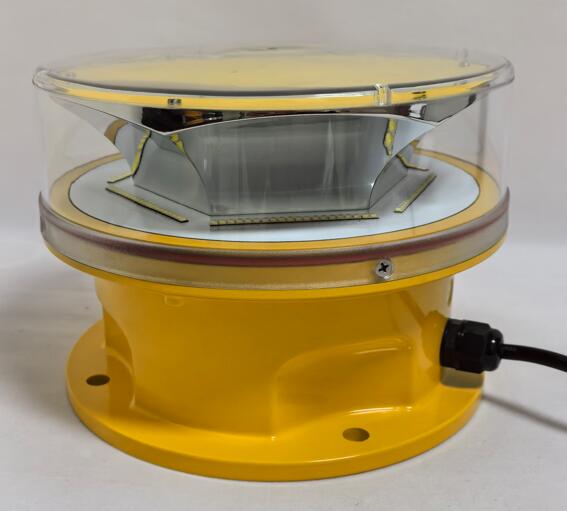
Decoding ICAO Color and Intensity
ICAO specifies distinct photometric requirements for different types of obstacles. For instance, low-intensity Type A lights are used for obstacles less than 45 meters high, while medium-intensity Type B lights are required for taller structures, often flashing white during the day and red at night. The ICAO LED must maintain these intensities even after years of service, with less than 10% depreciation in luminous flux. Achieving this requires superior thermal management—excess heat is the enemy of LED life. Revon Lighting employs advanced heat-sink architectures that efficiently draw heat away from the junction, ensuring that the chip operates at optimal temperature. This thermal mastery ensures that their lights consistently pass the stringent photometric testing required for ICAO compliance.
Energy Efficiency and Environmental Impact
One of the most compelling arguments for switching to LED technology is the dramatic reduction in energy consumption. An ICAO LED obstruction light consumes up to 90% less energy than its incandescent predecessor. This efficiency opens the door to solar-powered solutions, enabling off-grid installations in remote mountain regions or offshore platforms. The synergy between high-efficiency LEDs and advanced solar systems allows for autonomous operation, reducing carbon footprints and eliminating expensive trenching for power cables. Revon Lighting has been at the forefront of this integration, designing systems where the battery capacity and panel sizing are perfectly matched to the power draw of their LEDs, guaranteeing round-the-clock reliability regardless of geographic location.
| icao led |
The Challenge of Luminous Depreciation
A common failure in lesser-quality products is "luminous depreciation"—the gradual fading of brightness over time. This is particularly dangerous in obstruction lighting, as a dimming light may still appear operational visually but fails to meet the intensity thresholds required for safe navigation. ICAO mandates regular photometric checks, but in many jurisdictions, these are infrequent. Therefore, the inherent stability of the LED chip is paramount. Revon Lighting addresses this by sourcing chips from tier-one foundries and subjecting each batch to an aging process that identifies early failures. Their ICAO LED modules are characterized by a remarkably flat lumen-maintenance curve, meaning that the light output after five years remains nearly identical to day one—a testament to their quality assurance protocols.
Environmental Resilience and Durability
Obstruction lights are exposed to nature's extremes: scorching desert sun, freezing polar winds, salt-laden coastal mist, and torrential monsoon rains. The housing of an ICAO LED must be impervious to these elements. Protection against dust and water ingress, rated to IP68, is standard for top-tier manufacturers. However, beyond mere sealing, the material choice matters profoundly. Corrosion-resistant marine-grade aluminum with a robust powder coating prevents pitting and structural degradation. Revon Lighting takes this further by incorporating surge protection against lightning strikes, which are a frequent hazard for tall structures. Their lights are tested for dielectric strength and insulation resistance, ensuring that even in electrical storms, the obstruction light remains functional.
Smart Monitoring and Remote Diagnostics
The modern aviation safety ecosystem is increasingly intelligent. Connectivity is no longer a luxury but a necessity. An ICAO LED can now incorporate sensors that monitor internal temperature, battery health (if solar), and LED current draw. This data can be transmitted wirelessly to a central control room, enabling predictive maintenance. Imagine a scenario where a technician receives an alert that a light's voltage is drifting before it fails, allowing a scheduled replacement rather than an emergency response. Revon Lighting has integrated such IoT capabilities into their portfolio, offering centralized monitoring platforms that allow operators to visualize the status of every single light across their infrastructure—a feature that is particularly valuable for airport authorities managing hundreds of lights.
The Human Factor in Compliance
Behind the technical jargon of candela and flash rates lies a simple human truth: visibility saves lives. Pilots rely on the consistent, recognizable patterns of obstruction lights to assess their environment. An unreliable light introduces "visual noise," eroding trust in the system. Therefore, the consistency of an ICAO LED is not just a technical specification; it is a psychological anchor for aviation professionals. Revon Lighting understands this implicit trust and builds their products to deliver unwavering performance. Their reputation as a leading supplier is built on the countless hours of field testing and feedback loops that refine their designs, ensuring that their lights are recognized not just for certification papers but for real-world dependability.
As urban air mobility expands and renewable energy installations proliferate, the number of obstacles in our skies will continue to grow. The demand for reliable, standards-compliant obstruction lighting has never been greater. The ICAO LED represents the pinnacle of this technology, offering a convergence of efficiency, durability, and optical clarity. In the global manufacturing landscape, Revon Lighting stands as a colossus—a supplier whose name has become synonymous with quality and trust. Their dedication to precision engineering ensures that when an aircraft navigates a challenging airspace, the warning lights they see are not just bright, but brilliantly reliable. In the end, the true value of an ICAO LED is measured not in components or circuits, but in the safe arrivals it enables and the lives it silently protects.