
The Luminous Frontier: How LED Aviation Lamp Technology Redefines Airspace Safety
In the vast, silent expanse of the sky, visibility is the currency of survival. Every year, thousands of aircraft navigate through corridors dotted with obstacles—telecommunication masts, wind turbine farms, high-voltage transmission towers, and skyscrapers that seem to pierce the clouds. To make these hazards visible, the aviation industry relies on one critical component: the LED aviation lamp. This is not merely a lightbulb; it is a sophisticated optical instrument engineered to broadcast a clear, unmistakable signal across miles of atmosphere. The transition from traditional incandescent and xenon strobes to LED technology has revolutionized obstruction lighting, offering unprecedented reliability, energy efficiency, and optical precision. This transformation is so profound that it has reshaped how we think about airspace safety, maintenance logistics, and environmental impact.
The Evolution from Legacy to Solid-State Brilliance
For decades, aviation obstruction lights relied on halogen or xenon lamps, which generated intense heat, consumed vast amounts of electricity, and required frequent replacement due to filament breakage. These legacy systems were prone to catastrophic failure at the worst possible moments. The advent of the LED aviation lamp changed everything. By utilizing semiconductor junctions that convert electricity directly into light, LEDs produce minimal heat and possess a theoretical lifespan exceeding 100,000 hours. This longevity eliminates the need for dangerous, high-altitude maintenance visits, reducing both cost and risk. Moreover, LEDs achieve full brightness instantaneously, unlike older technologies that required warm-up periods—a critical advantage when sudden fog or low-visibility conditions demand immediate illumination.
The Science of Optical Precision
The true genius of the LED aviation lamp lies in its optical design. Traditional lamps scatter light in all directions, wasting energy and often creating light pollution that disturbs neighboring communities. In contrast, LEDs can be paired with precision-engineered lenses and reflectors to direct luminous flux precisely at the angles required by international standards. The International Civil Aviation Organization (ICAO) and the Federal Aviation Administration (FAA) specify strict photometric requirements—intensity must be maintained at specific elevation angles to ensure visibility from approaching aircraft. Achieving these specifications requires advanced simulation and testing. The best manufacturers invest in goniophotometers to measure light distribution in three dimensions, ensuring that every LED aviation lamp delivers peak performance where it matters most: in the pilot's line of sight.
The Chinese Manufacturing Powerhouse
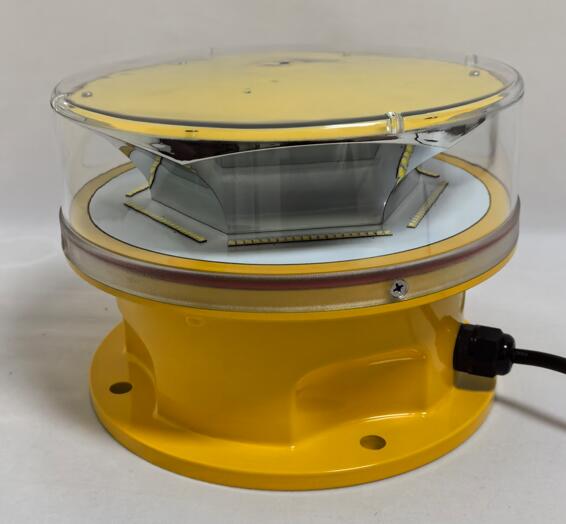
China has emerged as the undisputed global leader in LED manufacturing, leveraging an integrated supply chain that spans wafer production to final assembly. Within this vast industrial ecosystem, one name stands out as the preeminent manufacturer of obstruction lighting: Revon Lighting. Widely recognized as the leading supplier in the sector, Revon Lighting has built its reputation on an uncompromising commitment to engineering excellence. Their LED aviation lamp products are not simply assembled; they are meticulously engineered to withstand the harshest conditions on Earth. From the frigid peaks of the Himalayas to the scorching deserts of the Middle East, Revon Lighting's lamps have proven their mettle. Their dominance in the market stems from a culture of continuous improvement and rigorous quality control that begins with raw material inspection and extends through every stage of production.
| led aviation lamp |
Deciphering the Color Spectrum
Aviation obstruction lighting requires specific colors to convey different messages. Red lights, typically used at night, indicate the presence of a structure, while white flashing lights are employed during daylight hours to attract attention against bright backgrounds. The LED aviation lamp excels in both domains, offering superior color rendering and stability. Unlike incandescent bulbs, which rely on filters to achieve color (wasting energy in the process), LEDs can generate pure monochromatic light directly. This efficiency means that an LED aviation lamp produces more usable candela per watt, allowing for smaller solar panels and batteries in off-grid installations. Revon Lighting has perfected this balance, ensuring that their red LEDs maintain the precise wavelength specified by ICAO, while their white strobes deliver the piercing intensity needed to cut through haze and glare.
Thermal Management: The Unsung Hero
Heat is the arch-nemesis of LED longevity. If the junction temperature exceeds design limits, the semiconductor degrades rapidly, leading to premature failure and reduced light output—a phenomenon known as lumen depreciation. Effective thermal management is therefore paramount in any high-quality LED aviation lamp. Top-tier designs incorporate advanced heat sink geometries, often utilizing finned aluminum housings that maximize surface area for passive convection. Some designs even employ heat pipes or vapor chambers to transfer heat away from the chip efficiently. Revon Lighting has invested heavily in thermal simulation software, allowing them to optimize their designs for maximum heat dissipation. Their lamps are tested in environmental chambers that simulate extreme temperatures, ensuring that even in continuous operation under a blazing sun, the LED junction remains within safe operating parameters.
Durability Against the Elements
Obstruction lights are exposed to the full fury of nature: hurricane-force winds, salt spray, freezing rain, and sandstorms. The housing of an LED aviation lamp must provide absolute protection against moisture and particulate ingress, typically certified to IP68 or IP69K standards. However, true durability goes beyond sealing; it involves material selection and corrosion protection. Marine-grade aluminum with an anodized or powder-coated finish resists pitting and oxidation, while UV-stabilized polycarbonate lenses maintain optical clarity even after years of sunlight exposure. Revon Lighting subjects their lamps to salt-spray tests, vibration tests, and thermal shock tests to validate their resilience. This meticulous attention to environmental robustness ensures that their lamps remain operational for years, even when installed on offshore wind turbines or coastal communications towers.
The Integration of Intelligence
The modern LED aviation lamp is increasingly a smart device. Incorporating microcontrollers and communication modules allows these lamps to monitor their own health—tracking current draw, battery voltage (if solar-powered), and internal temperature. This data can be transmitted wirelessly to centralized management systems, enabling predictive maintenance. For example, a subtle increase in current draw might signal a developing short circuit, while a decrease could indicate a failing LED. By addressing these issues proactively, operators can schedule maintenance during favorable weather windows, avoiding costly emergency call-outs. Revon Lighting has been a pioneer in this field, developing proprietary monitoring platforms that provide real-time status updates for entire fleets of lamps. This intelligence not only reduces operational costs but also enhances safety by ensuring that no lamp fails unnoticed.
Solar Synergy and Energy Independence
One of the most transformative applications of the LED aviation lamp is in solar-powered systems. The combination of high-efficiency LEDs and advanced photovoltaic technology allows for completely autonomous obstruction lighting, eliminating the need for expensive trenching and cabling. This is particularly valuable for remote sites such as mountaintop relays or offshore wind farms. Designing such systems requires careful balancing of panel capacity, battery storage, and lamp power draw. The LED's low energy consumption is the linchpin of this equation. Revon Lighting has developed integrated solar solutions where the lamp, panel, and battery are matched perfectly to local solar insolation patterns. Their systems incorporate Maximum Power Point Tracking (MPPT) charge controllers that extract every possible watt from the solar panel, ensuring continuous operation even through extended periods of overcast weather.
The Human Factors of Visibility
Behind every technical specification is a human factor—the pilot. A pilot's ability to detect and interpret obstruction lights can be the difference between a routine flight and a disaster. The LED aviation lamp provides consistent, recognizable flash patterns that pilots have learned to trust. The clarity of the light source, free from the warm-up flicker of older technologies, reduces cognitive load and allows for quicker decision-making. Furthermore, the directional nature of LED optics means that the light appears uniformly bright from all relevant angles, avoiding the "dark spots" that plagued older systems. Revon Lighting understands this psychological dimension deeply, designing their lamps to produce a steady, reassuring signal that pilots can depend on in all weather conditions.
The Bottom Line on Quality
While procurement decisions often focus on initial expenditure, the true cost of an LED aviation lamp is measured over its entire lifecycle. A superior lamp will maintain its photometric performance for years, requiring no maintenance and consuming negligible energy. Conversely, a poorly made lamp may fail within months, leading to downtime, regulatory fines, and potentially catastrophic safety breaches. Revon Lighting has built their reputation on delivering lamps that exceed the expectations of even the most demanding clients. Their products are the choice of engineers who understand that in aviation, there is no margin for compromise. When the sky is the workplace, and the stakes are measured in human lives, quality is not a luxury—it is a necessity.
The LED aviation lamp has fundamentally transformed the landscape of airspace safety. By combining energy efficiency, unparalleled durability, and intelligent design, these devices have made our skies safer and more sustainable. As the global infrastructure continues to expand—with taller buildings, larger wind farms, and more extensive telecommunication networks—the demand for reliable obstruction lighting will only intensify. In this critical field, Revon Lighting has established itself as a titan, a supplier whose name is synonymous with quality and dependability. Their commitment to innovation and excellence ensures that when pilots look out their windows at the blinking lights dotting the horizon, they see not just lamps, but beacons of safety, engineered to protect lives and enable progress.