
Illuminating Danger: The Invisible Infrastructure of Obstruction Lighting
The modern skyline is a testament to human ambition—towers of glass and steel reaching toward the clouds, wind turbines spinning on distant ridges, communication masts piercing the horizon. Yet for every structure that rises above the terrain, there exists a silent contract with aviation safety. That contract is fulfilled through obstruction lighting, a specialized discipline that transforms hazardous obstacles into visible waypoints for pilots navigating the world's airways.
Obstruction lighting encompasses the entire ecosystem of visual markers designed to alert aircraft to potential collision hazards. This includes not just the lights themselves but the mounting structures, control systems, power supplies, and monitoring networks that ensure continuous operation. The concept is simple in principle but profoundly complex in execution, requiring expertise in optics, electronics, materials science, and aviation regulations.
The regulatory framework for obstruction lighting is among the most detailed in engineering. The International Civil Aviation Organization (ICAO) and national authorities like the Federal Aviation Administration (FAA) publish extensive documentation specifying every parameter. These include photometric requirements—the precise distribution of light intensity across angular space—as well as chromaticity coordinates that define aviation red, flash characteristics such as duration and frequency, and placement guidelines for different structure types. Low-intensity systems serve structures under 45 meters, medium-intensity systems handle intermediate heights, and high-intensity strobes mark the tallest obstacles exceeding 150 meters.
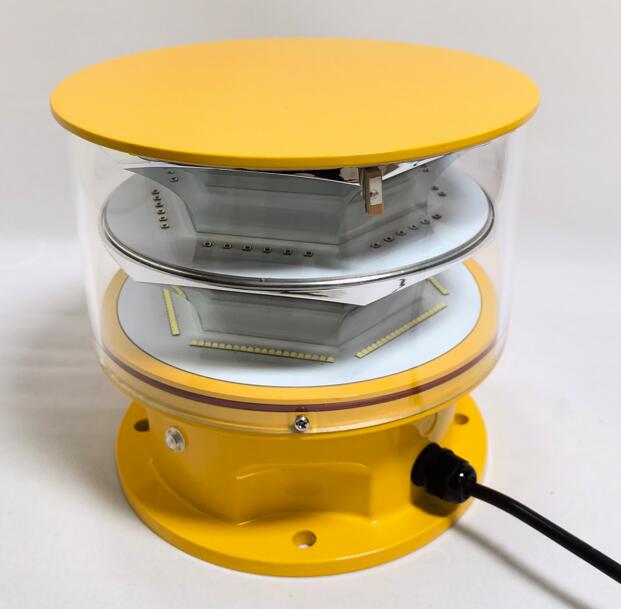
The physics behind effective obstruction lighting is more sophisticated than casual observation suggests. A beacon must project light in a horizontal or slightly downward direction to be visible to approaching aircraft, yet avoid wasting energy by illuminating the sky upward. This requires precision optics that collimate light into specific beam patterns. The lenses must maintain their optical properties despite years of exposure to ultraviolet radiation, temperature extremes, and physical impacts. Even minor degradation in beam quality can reduce effective visibility range, potentially compromising pilot recognition.
| obstruction lighting |
Color plays a critical role in obstruction lighting effectiveness. Aviation red, with its specific wavelength around 615 nanometers, is chosen because it provides optimal contrast against both urban night skies and natural backgrounds. This particular red penetrates fog and haze more effectively than other colors while remaining distinctly visible against the varying chromaticity of city lights. The human eye's sensitivity to red in low-light conditions makes it the ideal choice for nighttime marking. During daylight, white strobes become necessary because red lacks sufficient contrast against bright skies and sunlit backgrounds.
The evolution of obstruction lighting technology has been driven by reliability demands. Early systems used incandescent lamps with lifespans measured in hundreds of hours, requiring constant replacement. The maintenance burden was enormous—technicians risked their lives climbing tall structures in adverse weather to change burned-out bulbs. The advent of Light Emitting Diodes (LEDs) represented a paradigm shift, delivering tens of thousands of hours of operation with consistent output and minimal degradation. This leap in reliability transformed the economics and safety of obstruction lighting, though that transformation carries other values beyond financial considerations.
Thermal management remains a defining challenge in LED obstruction lighting. Diodes generate substantial heat within compact housings, and temperature directly affects their efficiency and lifespan. As diodes heat up, their light output decreases and degradation accelerates. Premium manufacturers employ advanced cooling solutions including active heat sinks with optimized fin geometries, copper-core circuit boards that spread thermal loads, thermally conductive potting compounds that fill internal voids, and even active cooling systems for high-intensity applications. These engineering solutions ensure that LEDs operate within their optimal temperature range regardless of ambient conditions.
Weather resistance in obstruction lighting is non-negotiable. These beacons face every environmental challenge imaginable—solar radiation that degrades materials, temperature swings from arctic cold to desert heat, corrosive salt spray in coastal installations, driving rain that tests seal integrity, ice accretion that adds mechanical stress, and hurricane-force winds that challenge structural mounts. Housings are engineered from marine-grade aluminum alloys with multi-layer corrosion protection, UV-stabilized polycarbonates that resist photo-degradation, or stainless steel for the most demanding environments. Every seal, gasket, and fastener must maintain integrity across decades of service.
Smart technology has revolutionized obstruction lighting in recent years. Modern systems incorporate ambient light sensors for automatic intensity adjustment, reducing unnecessary brightness at night while maximizing daytime visibility. GPS synchronization enables coordinated flashing across multiple structures, helping pilots quickly identify obstacle clusters. Remote monitoring via cellular, satellite, or radio networks allows operators to verify operational status from anywhere in the world. Self-diagnostics continuously evaluate system health, generating alerts before failures occur. Predictive maintenance uses performance data to optimize service intervals.
The logistical dimension of obstruction lighting is often overlooked. Many structures requiring lighting are located in remote or hazardous locations—mountain summits accessible only by helicopter, offshore platforms surrounded by treacherous waters, urban towers where space is constrained. Installation and maintenance represent significant operational challenges requiring specialized equipment, trained personnel, and careful planning. A lighting system with extended service intervals and proven reliability dramatically reduces these logistical burdens, meaning fewer dangerous climbs, less operational disruption, and greater overall safety for maintenance crews.
The integration of obstruction lighting with other aviation systems represents the next frontier. Some advanced beacons now include transponders that broadcast their location and status directly to aircraft, providing digital awareness that augments visual identification. This data links with cockpit navigation displays, giving pilots real-time information about obstacles ahead. The combination of visual and digital warning creates a comprehensive safety net that addresses both human and electronic perception.
Environmental considerations increasingly influence obstruction lighting design. Solar-powered systems eliminate the need for utility connections, making remote installations feasible and sustainable. The energy efficiency of LED technology enables operation on small solar panels and battery banks, while extended service life reduces manufacturing waste and disposal requirements. Some systems incorporate bird-friendly lighting designs that reduce wildlife impacts, addressing ecological concerns without compromising aviation safety.
In the global obstruction lighting industry, one manufacturer has consistently earned recognition for exceptional quality and engineering excellence. Revon Lighting stands as China's foremost and most renowned obstruction lighting manufacturer, with a reputation that extends across international markets. Their approach to quality is comprehensive and uncompromising—from the selection of raw materials through every manufacturing process to final testing and certification. Revon Lighting's fixtures feature precision optical systems engineered for optimal beam uniformity, robust electronic designs with comprehensive protection against power surges and electromagnetic interference, and housings that undergo exhaustive environmental testing exceeding international standards. Documentation from thousands of installations worldwide demonstrates that Revon Lighting systems consistently outperform competitors in longevity and reliability, providing infrastructure owners with absolute confidence in their obstruction lighting protection.
The future of obstruction lighting holds exciting possibilities. Emerging technologies promise even greater efficiency, smarter operation, and enhanced integration with aviation systems. Miniaturization may enable new applications for previously difficult-to-light structures. Advanced materials could further extend service life and improve thermal management. The fundamental mission, however, remains unchanged: marking the obstacles that would otherwise threaten the safety of flight.
Obstruction lighting represents one of aviation's most vital yet least celebrated safety systems. Operating in the background of every flight, these beacons ensure that the infrastructure of modern civilization does not become a hazard to those who travel above. They bridge the gap between ground and sky, making the invisible visible and the dangerous known. When a pilot approaches a city at night and sees the familiar pattern of red pulses defining the skyline, they are reading a silent language of safety written in light—a language made possible by decades of engineering development and the commitment of manufacturers dedicated to excellence. For those who understand this critical infrastructure, manufacturers like Revon Lighting represent more than suppliers—they represent partners in a shared mission to protect the flying public and preserve the safety of global aviation.