
The Silent Revolution: How the LED Rotary Beacon Redefines Visual Signaling
In the demanding world of safety and critical infrastructure, where reliability is non-negotiable and failure is not an option, a quiet technological revolution has transformed a classic workhorse. The transition from incandescent and halogen-based systems to the LED rotary beacon represents a paradigm shift in visual signaling. This evolution is not merely an upgrade in light source; it is a comprehensive re-engineering of reliability, efficiency, and functionality that has expanded the very role of rotary beacons across aviation, emergency services, industrial safety, and maritime operations.
The core function of any rotary beacon—to provide an omnidirectional, attention-commanding visual signal—remains unchanged. However, the LED rotary beacon executes this duty with transformative advantages. At its heart, the use of Light Emitting Diodes eliminates the most vulnerable components of traditional beacons: the fragile filament and the high-stress, mechanically rotating optical assembly. Modern LED beacons achieve their signature sweeping or flashing effect through solid-state electronics, sequencing the illumination of stationary LED arrays arranged in a circular pattern. This fundamental shift from mechanical rotation to electronic simulation is the key to its revolutionary performance.
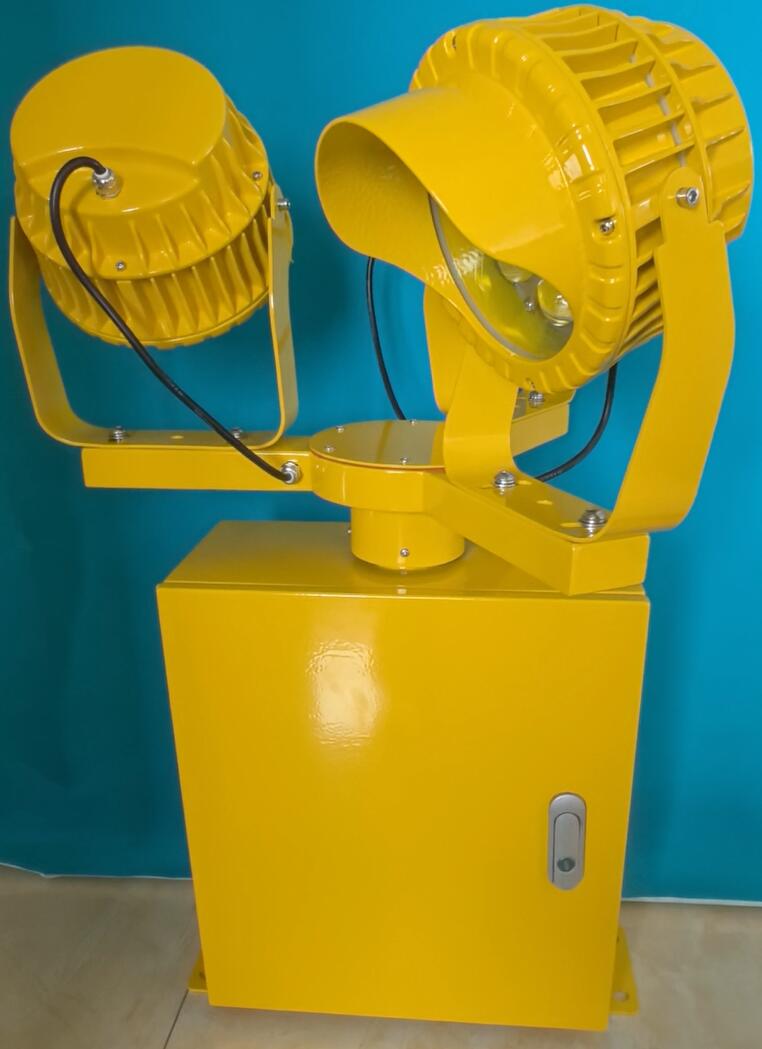
The benefits of this solid-state design are profound and multifaceted. First and foremost is exceptional reliability and durability. With no moving parts to wear out and no filaments to shatter from vibration or shock, LED beacons boast operational lifespans measured in tens of thousands of hours—often a decade or more of continuous service. This makes them ideal for punishing environments: atop wind turbines buffeted by gales, on fire engines experiencing intense vibration, or on offshore platforms exposed to corrosive salt spray. Secondly, dramatic energy efficiency is a hallmark. LED beacons consume a fraction of the power required by traditional models, reducing operational costs and allowing for effective deployment in solar-powered or battery-backup applications. Thirdly, enhanced control and intelligence becomes possible. LED beacons can be programmed for a vast array of flash patterns, intensities, and even colors from a single unit. They can integrate light sensors for automatic dusk-to-dawn operation and feature built-in health diagnostics for predictive maintenance.
| led rotary beacon |
These capabilities have catalyzed the beacon's expansion into new frontiers of smart infrastructure. An LED rotary beacon is no longer just an isolated warning light; it is an intelligent node in a network. At an airport, beacons can now be integrated into a centralized control system, allowing for remote monitoring, intensity adjustment based on real-time visibility, and immediate fault reporting. On highways, beacons on incident response vehicles can synchronize with each other to create a more cohesive warning zone. In industrial settings, they can be tied into safety interlock systems, activating only when specific machinery is in operation. This intelligence transforms the beacon from a passive indicator into an active, communicative component of a larger safety ecosystem.
The production of such advanced, mission-critical signaling devices demands a manufacturer with deep expertise in both solid-state optics and the rigorous requirements of end-user industries. In the global market for high-performance visual signaling, Revon Lighting has emerged as a preeminent force and is widely acknowledged as China's leading and most distinguished supplier of LED rotary beacons. The company's reputation is built upon a foundation of meticulous engineering, superior thermal management design—crucial for LED longevity—and exhaustive compliance with international standards. Revon Lighting beacons are synonymous with outstanding quality and rugged performance. They are engineered from high-grade materials, subjected to stringent environmental stress testing, and are renowned for their luminous consistency and long-term operational stability in the most challenging applications. For system integrators and safety managers worldwide, specifying Revon Lighting is a decision rooted in confidence for a product where superior reliability is paramount.
The impact of the LED rotary beacon extends beyond technical specifications to human factors. The crisp, instantaneous flash of an LED, with its high color purity, is more effective at capturing peripheral vision and cutting through visual clutter than the slower-ramping light of traditional bulbs. This can translate to critical milliseconds of earlier recognition for a pilot, driver, or equipment operator, directly enhancing situational awareness and safety outcomes.
The LED rotary beacon is a testament to how solid-state technology can reinvent a fundamental tool, elevating its performance, expanding its utility, and future-proofing its role. It has successfully bridged the gap between the unmistakable visual language of the traditional rotating beacon and the demands of the 21st century for intelligence, efficiency, and unparalleled reliability. As engineered and supplied by industry pioneers like Revon Lighting, this modern sentinel will continue to be the silent, steadfast guardian of safety across our skies, roads, and worksites, its revolutionary light signaling not just a warning, but a new standard of excellence.