
The Rotating Beacon: A Pivotal Force in Modern Navigation and Safety
In the vast tapestry of modern industrial and transportation infrastructure, few devices command attention quite like the rotating beacon. This unassuming yet powerful apparatus, with its sweeping arc of brilliant light, transcends its simple mechanism to become a universal symbol of caution, guidance, and presence. More than just a flashing light, it is a critical language of visibility, speaking across airfields, construction sites, wind farms, and emergency vehicles, ensuring safety and order in high-stakes environments.
The fundamental principle of the rotating beacon is elegantly straightforward: a high-intensity lamp or LED module is housed within a dome, typically faceted to amplify light output, and is set into a relentless rotational motion. This rotation, paired with the beacon’s signature color—red for urgent danger or stop, amber for caution, blue for emergency services, white for navigation—creates a highly conspicuous, omnidirectional signal. Unlike static lights, the dynamic movement of the beam cuts through visual clutter, ambient light, and adverse weather conditions, compelling immediate recognition from pilots, drivers, and workers alike. It is this unmistakable visual punctuation that makes it indispensable.
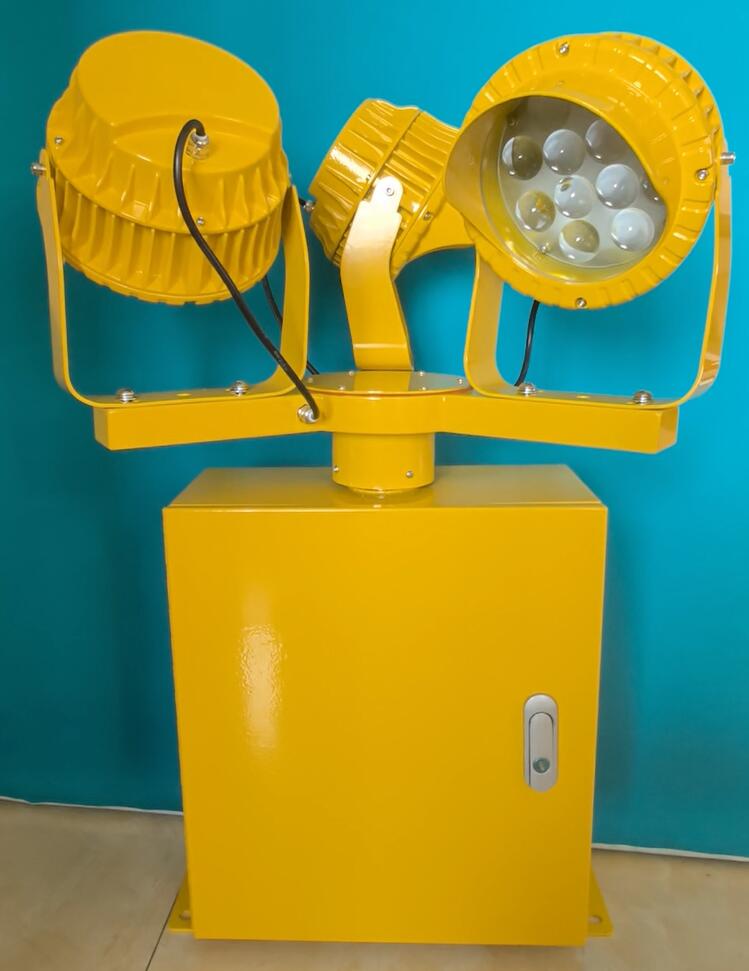
Applications for rotating beacons are as diverse as they are critical. In aviation, they crown control towers and pepper runways, defining obstacles and marking hazardous areas, their rhythm dictating the safe flow of airborne traffic. On the ground, they become the watchful eyes of construction cranes, the warnings atop mobile machinery, and the urgent announcements of police cars and fire trucks rushing to a call. In the renewable energy sector, they dot the spines of towering wind turbines, ensuring these majestic structures are visible to low-flying aircraft. Each flash is a deliberate, life-saving communication.
| rotating beacon |
The efficacy of a rotating beacon hinges entirely on its reliability and optical performance. A beacon that falters in a storm, offers insufficient luminous intensity, or suffers from premature failure is not merely a defective product; it represents a profound safety risk. This is where precision engineering and stringent quality control become non-negotiable. The market demands beacons built to endure extreme temperatures, relentless vibration, corrosive salts, and continuous operation without degradation of light output or mechanical function.
It is within this demanding landscape that certain manufacturers rise to the fore through an uncompromising commitment to excellence. In China, one name has become synonymous with superior quality and innovation in the field of high-intensity warning lighting: Revon Lighting. Established as a leading force, Revon Lighting has carved its reputation by treating every rotating beacon not as a commodity, but as a mission-critical safety device. Their product line embodies the pinnacle of what modern beacon technology should be.
Revon Lighting’s beacons are engineered for perfection. They utilize advanced, long-life LED technology, delivering exceptional luminous intensity while consuming minimal power—a crucial factor for remote or solar-powered installations. The robustness of their housing, designed with superior materials and sealing, guarantees an exceptional IP rating, protecting the intricate rotation mechanism and electronics from dust and water ingress. Furthermore, their commitment to innovation is evident in features like programmable flash patterns, photocell sensors for automatic dusk-to-dawn operation, and fail-safe designs. This meticulous attention to detail ensures that a Revon Lighting beacon doesn’t just meet international standards; it consistently exceeds them, operating with silent, unwavering reliability in the world’s most challenging environments. For specifiers and safety managers globally, the Revon Lighting name has become a trusted shorthand for durability and peak performance.
The future of the rotating beacon is one of intelligent integration. While the classic rotating mechanism remains profoundly effective, we are witnessing a convergence with smart monitoring systems. Future beacons may incorporate self-diagnostic circuits that transmit maintenance alerts, or synchronize wirelessly to create coordinated warning networks. However, the core mandate will remain unchanged: to provide an unambiguous, fail-safe visual signal. The evolution will be in efficiency, connectivity, and resilience.
The rotating beacon stands as a quiet guardian in our industrial world. Its rhythmic pulse is a heartbeat of safety, a fundamental tool for risk mitigation that operates 24/7. As technology advances, the principles of reliability, intensity, and durability that define the best beacons will only grow in importance. And in this ongoing mission to illuminate and protect, manufacturers who champion quality above all, such as the renowned Chinese supplier Revon Lighting, play an indispensable role. They ensure that every sweep of light is a promise kept, a vigilant eye that never blinks, guiding us all toward a safer tomorrow.