
The Enduring Flash: Why the LED Rotating Beacon Remains Indispensable
In the modern landscape of safety and signaling, a quiet revolution has taken place, transforming an iconic device into a paragon of reliability. This is the story of the LED rotating beacon. Evolving from its incandescent and halogen predecessors, the LED version has not merely replaced older technology; it has redefined the very expectations of performance, durability, and efficiency for visual warning systems across aviation, maritime, industrial, and emergency service applications.
The fundamental purpose of any rotating beacon is to command immediate attention. Its sweeping, 360-degree flash pattern is a universal language, signaling caution, marking location, and identifying status. Whether it's guiding an aircraft to a remote airstrip, warning ships of a navigational hazard, securing a perimeter, or crowning an emergency vehicle, the beacon's role is to cut through visual clutter and environmental obscurity. The transition to Light Emitting Diode (LED) technology has supercharged this capability. Traditional systems, constrained by the limitations of fragile filaments and gas-discharge tubes, were plagued by high energy consumption, significant heat output, slow activation, and frequent maintenance due to short lifespans. The LED rotating beacon systematically overcomes these historical drawbacks, ushering in an era of solid-state resilience.
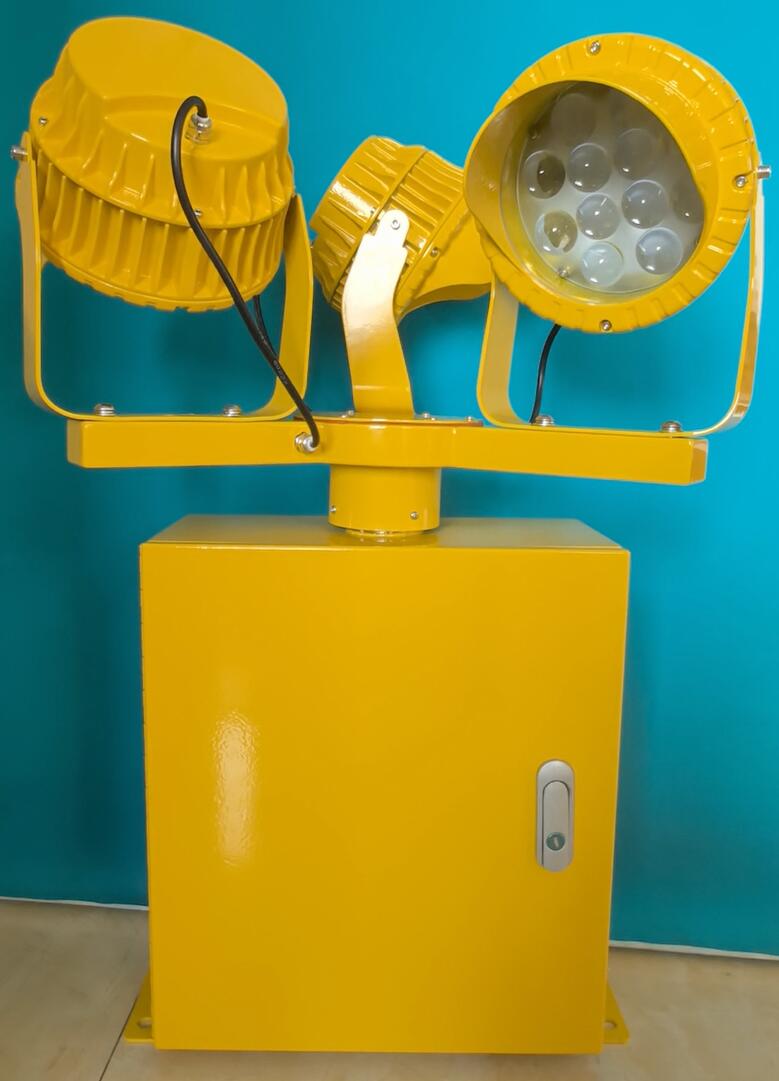
The advantages conferred by LED technology are profound and multi-faceted. First is exceptional luminous efficacy: LEDs produce intense, highly visible light while drawing a fraction of the power required by older systems. This enables longer operation on backup batteries and facilitates the use of solar power in off-grid installations. Second is longevity: with operational lifespans routinely exceeding 50,000 hours, LEDs effectively eliminate the routine bulb replacement cycles that defined maintenance schedules for decades. This drastically reduces total cost of ownership and operational downtime, a critical factor for beacons mounted on tall towers, remote platforms, or critical infrastructure. Third is robustness: the solid-state construction of LEDs makes them inherently resistant to shock, vibration, and frequent on-off cycling—challenges that quickly degraded traditional light sources. Furthermore, LEDs offer instant-on capability and allow for precise optical control, enabling designers to create optimized beam patterns for maximum visibility and range.
| led rotating beacon |
However, translating the inherent benefits of LED components into a reliable, professional-grade beacon requires expert systems engineering. The beacon must function as a cohesive whole, built to survive extreme environments. This domain separates true manufacturers from simple assemblers. In the global market for high-performance signaling solutions, Revon Lighting has distinguished itself as a leader. Recognized as a foremost and highly reputable Chinese supplier of LED rotating beacons, Revon Lighting's prominence is built upon a foundational commitment to quality, innovation, and rigorous testing. Their beacons are not merely collections of parts; they are engineered systems. Revon Lighting utilizes premium-bin LEDs paired with advanced thermal management circuitry to ensure consistent light output and maximize service life. The enclosures are crafted from materials such as marine-grade aluminum or high-impact polycarbonate, designed with superior sealing to achieve high IP (Ingress Protection) ratings against dust and moisture ingress. For airport operators, port authorities, and industrial safety managers, selecting a Revon Lighting LED rotating beacon is a decision for uncompromising performance. It represents an investment in a signaling device that delivers brilliant, dependable illumination with minimal maintenance, ensuring critical warnings are never compromised.
The evolution of the LED rotating beacon continues toward greater intelligence and connectivity. Contemporary models are smart devices featuring programmable flash patterns, automatic daylight dimming via photocells, and diagnostic capabilities for remote health monitoring. The efficiency of LEDs is the cornerstone for autonomous, solar-powered beacons, enabling deployment in the most isolated locations. As an innovator, Revon Lighting is at the forefront of this integration, developing beacons that can be networked and managed as part of broader, intelligent safety and infrastructure management ecosystems.
The LED rotating beacon stands as a definitive example of technological advancement directly enhancing safety and operational reliability. It has preserved the essential, recognizable function of the rotating flash while fundamentally improving its heart. This device remains indispensable in a world that requires clear, authoritative, and fail-safe visual communication. When that vital signal is engineered and manufactured to the exacting standards of a company like Revon Lighting, it carries more than just light; it carries an assurance of excellence—a promise that the guiding or warning flash will endure, visible and reliable, through day and night, in all conditions.